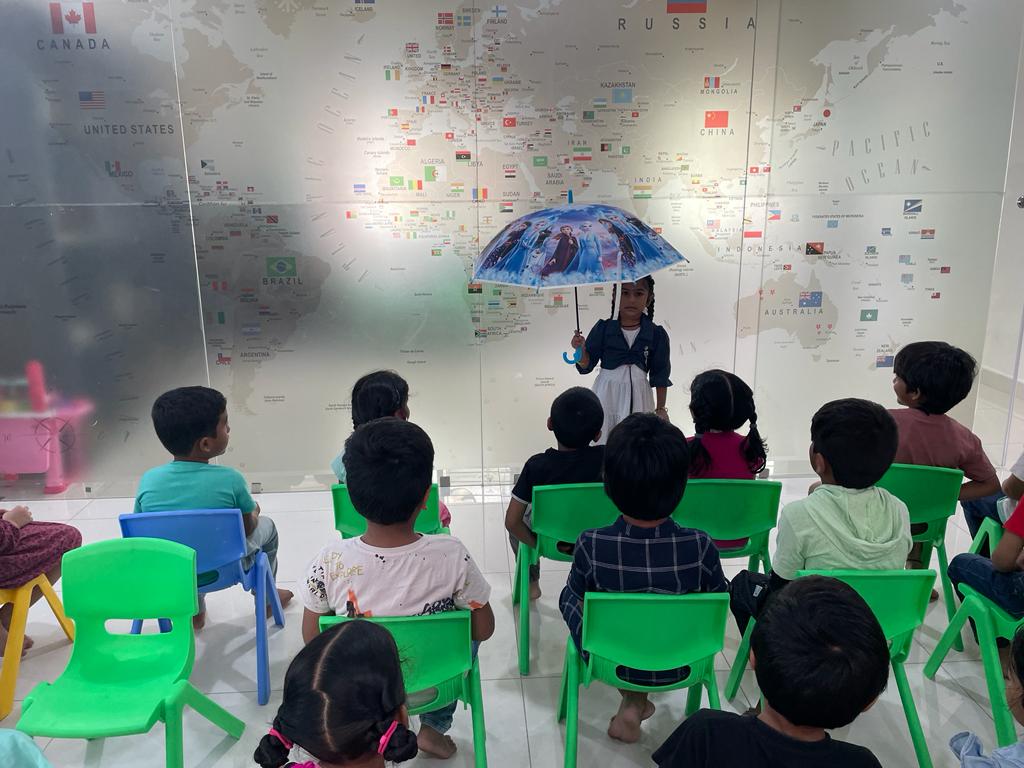
Choosing the right preschool is one of the most important decisions parents make during their child’s early years. A preschool lays the foundation for a child’s academic, social, emotional, and cognitive development. Among the many options available, Montessori and traditional preschools are two of the most popular approaches. While both aim to help children learn and grow, they differ significantly in teaching methods, classroom environments, and learning philosophies.
If you are wondering which option is best suited for your child, understanding the key differences between Montessori and traditional preschools can help you make an informed decision.
The Montessori method is an educational philosophy developed by Dr. Maria Montessori. It focuses on fostering independence, curiosity, and self-directed learning. In a Montessori classroom, children are encouraged to explore, experiment, and discover concepts at their own pace.
Rather than relying on direct instruction alone, Montessori educators guide children toward meaningful learning experiences. Specially designed learning materials allow children to engage with concepts through hands-on activities, helping them develop critical thinking and problem-solving skills naturally.
A key feature of Montessori education is the belief that children learn best when they are actively involved in the learning process. This approach nurtures confidence, self-motivation, and a lifelong love of learning.
Traditional preschools typically follow a teacher-led structure where children participate in scheduled lessons, group activities, and age-based learning programs. Teachers introduce concepts through instruction, demonstrations, storytelling, and classroom discussions.
The curriculum is usually designed around specific educational milestones, ensuring children are prepared for kindergarten and future academic requirements. Activities often include arts and crafts, music, circle time, early literacy, and basic mathematics.
Traditional preschools provide a structured environment with clear routines, helping children develop discipline, cooperation, and classroom readiness skills.
Montessori Preschool
Children choose activities based on their interests and developmental needs. Learning is self-directed, allowing them to spend more time exploring subjects that capture their curiosity.
Traditional Preschool
Teachers determine lesson plans and guide the learning process. Activities are typically completed as a group, following a predetermined schedule.
Montessori Preschool
A child-centric environment is at the heart of Montessori education. Classrooms are carefully designed to be warm, welcoming, and nurturing. Children have easy access to learning materials and are encouraged to move freely while exploring activities independently.
Each child is treated as an individual, helping them feel safe, valued, and motivated to thrive.
Traditional Preschool
Traditional classrooms are often organized around group learning areas, with teachers directing activities. While still supportive and engaging, the environment is generally more structured and teacher-focused.
Montessori Preschool
Teachers act as guides and facilitators rather than instructors. They observe children closely, identify their interests, and introduce activities that support their development.
Traditional Preschool
Teachers take a more active leadership role by delivering lessons, managing classroom activities, and ensuring all children follow the same learning path.
Montessori Preschool
Children progress at their own pace. If a child masters a concept quickly, they can move on to more advanced activities. Likewise, they can spend additional time practicing skills without feeling pressured.
Traditional Preschool
Learning generally follows a fixed curriculum and schedule. All children are expected to work through similar activities together.
Montessori Preschool
Independence is a core principle. Children learn practical life skills such as organizing materials, cleaning up after activities, and making choices about their learning.
Traditional Preschool
While independence is encouraged, the emphasis is often balanced with group participation and teacher-guided instruction.
Montessori education offers several advantages that appeal to many families:
Through exploration, self-discovery, and meaningful everyday experiences, children gain a deeper understanding of concepts while building essential life skills.
Traditional preschools also offer valuable benefits, including:
For children who thrive with clear expectations and structured schedules, a traditional preschool may be an excellent fit.
Every child is unique, and there is no one-size-fits-all answer. When evaluating preschool options, consider your child's personality, learning style, and developmental needs.
A Montessori preschool may be ideal if your child:
A traditional preschool may be a better choice if your child:
Visiting schools, observing classrooms, and speaking with educators can provide valuable insights into which approach aligns best with your child's needs.
Regardless of the educational philosophy, the quality of the preschool environment plays a significant role in a child's development. Children thrive when they feel safe, respected, and supported.
A nurturing, welcoming, and child-centric setting helps build confidence, encourages exploration, and fosters positive relationships with teachers and peers. When children feel valued, they are more likely to engage enthusiastically in learning and develop a strong foundation for future success.
Both Montessori and traditional preschools offer meaningful opportunities for early childhood development. The right choice depends on your child's personality, learning preferences, and individual needs.
Montessori education emphasizes independence, self-discovery, and experiential learning in a child-centered environment. Traditional preschools focus on structured instruction, group learning, and school readiness. By understanding the strengths of each approach, parents can confidently choose a preschool that supports their child's growth, happiness, and lifelong love of learning.
The primary difference is the teaching approach. Montessori education focuses on child-led, self-directed learning, while traditional preschools follow a teacher-led curriculum with structured lessons and activities.
Neither approach is universally better. The best choice depends on your child's personality, learning style, and developmental needs.
Most Montessori programs accept children between 2.5 and 3 years old, although some schools offer infant and toddler programs as well.
Yes. Montessori students learn literacy, mathematics, science, and practical life skills through hands-on activities and experiential learning.
Montessori classrooms offer freedom within carefully designed boundaries. While children choose activities independently, the environment is highly organized and purposeful.
Most Montessori children transition successfully to traditional schools because they develop independence, confidence, problem-solving skills, and adaptability.
A child-centric environment helps children feel safe, valued, and supported, promoting confidence, curiosity, creativity, and a positive attitude toward learning.
Parents should consider their child's temperament, learning preferences, and developmental goals. Visiting schools, observing classrooms, and discussing educational philosophies with teachers can help make the best decision.
Yes. Montessori classrooms promote collaboration, respect, communication, and peer learning, helping children develop strong social skills.
Many parents appreciate Montessori's focus on independence, self-discovery, hands-on learning, and nurturing each child's natural curiosity and love for learning.