A Moment of Pride for Hidden Stars School: Creative Teacher Excellence Award

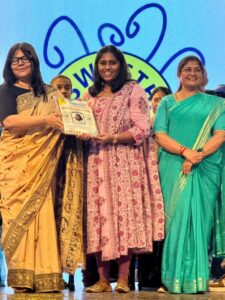
At Hidden Stars School, Guntur, we believe that great teaching goes beyond textbooks. It inspires curiosity, encourages creativity, and makes learning a joyful and meaningful experience for every child. Today, we are delighted to celebrate a proud milestone as our Academic Facilitator receives the prestigious “Creative Teacher Excellence Award” from Swasthi Foundation.

This wonderful recognition celebrates her creativity, dedication, and commitment to making a positive difference in children's learning journeys.

Celebrating Excellence in Teaching

The Creative Teacher Excellence Award was presented by Smt. Shashikala Annasaheb Jolle, MLA, former Minister of the Government of Karnataka, and President of Special Olympics Bharat – Karnataka, along with Ms. Antara Dey Chaudhary, an Applied Behaviour Analysis (ABA) professional and Founder of URA.

The recognition at the Swasthi Foundation's event is a memorable moment for our school community. It highlights the importance of innovative teaching practices and the valuable role educators play in shaping young minds.

We are incredibly proud to see our Academic Facilitator's efforts and passion for education receive this appreciation.
Creative Teacher Excellence Award

Creativity That Makes Learning Meaningful

At Hidden Stars School, we understand that every child is unique. Children learn in different ways, explore the world with curiosity, and develop skills at their own pace. Our educational approach encourages them to ask questions, experiment, discover, and learn through meaningful experiences.

Guided by our philosophy, “Let’s Unlearn!”, we move beyond conventional teaching methods to create a child-centred learning environment where children feel confident to express themselves and explore new ideas.

We believe that creativity in teaching helps children:

Our Academic Facilitator's recognition reflects the spirit of these values and our commitment to nurturing enthusiastic, independent learners.

The Importance of Creative Teaching in Early Education

The early years of education lay the foundation for a child's future learning and development. During this stage, children benefit from opportunities to explore their surroundings, interact with others, and develop their natural interests.

Creative teaching makes these experiences more engaging and effective. Instead of simply memorising information, children can participate in activities that encourage them to think, imagine, collaborate, and apply what they learn.

At Hidden Stars School, our Montessori-inspired approach supports learning through exploration, practical experiences, freedom of choice within a prepared environment, and age-appropriate learning materials.

Our teachers act as facilitators, observing children's needs and guiding them as they discover new concepts. This approach encourages independence, inner discipline, confidence, and a lifelong love of learning.

We believe that meaningful education is not only about what children learn, but also about how they learn and the confidence they develop along the way.

A Recognition That Inspires Us to Do More

An award is more than a moment of celebration. It is a reminder of the dedication, patience, and creativity that educators bring to their work every day.

Every thoughtful activity, every encouraging word, and every opportunity to explore can make a meaningful difference in a child's development. Teachers help children recognise their strengths, overcome challenges, and discover their potential.

This achievement inspires the entire Hidden Stars School community to continue exploring innovative educational practices and creating enriching learning experiences for every child.

We extend our heartfelt gratitude to Swasthi Foundation for this recognition and congratulate our Academic Facilitator on this well-deserved honour.
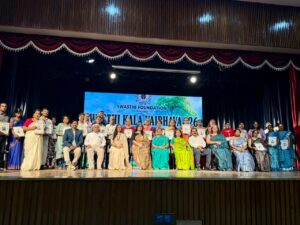
Creative Teacher Excellence Award

Hidden Stars School: Where Every Child Is Encouraged to Shine

At Hidden Stars School, Guntur, our mission is to create a nurturing environment where children can explore, discover, learn, and excel.

From pre-primary education to Grade 5, we strive to make learning engaging, collaborative, and child-centred. We want every child to feel valued, develop confidence, and discover the joy of learning.

Our philosophy, “Let’s Unlearn!”, reminds us that education is an evolving journey. As educators, we must continue to question traditional approaches, embrace creativity, and find better ways to support children's individual growth.

This award is a proud milestone in our journey and an inspiration to keep moving forward with dedication and purpose.

Congratulations to our Academic Facilitator on receiving the Creative Teacher Excellence Award! May this achievement mark the beginning of many more milestones and inspire us to create an even greater impact on the lives of our children.

At Hidden Stars School, every achievement encourages us to learn more, create more, and do more for our children. ❤️

Frequently Asked Questions (FAQs)

1. What is the Creative Teacher Excellence Award?

The Creative Teacher Excellence Award recognises a teacher's creativity, dedication, and contribution to making education meaningful and engaging for children.

2. Who received the Creative Teacher Excellence Award at Hidden Stars School?

Hidden Stars School's Academic Facilitator was honoured with the Creative Teacher Excellence Award by Swasthi Foundation.

3. Who presented the award?

The award was presented by Smt. Shashikala Annasaheb Jolle, MLA and former Minister of the Government of Karnataka and President of Special Olympics Bharat – Karnataka, along with Ms. Antara Dey Chaudhary, ABA professional and Founder of URA.

4. Why is creative teaching important for children?

Creative teaching encourages curiosity, independent thinking, problem-solving, confidence, and active participation. It helps children understand concepts through engaging experiences rather than relying only on memorisation.

5. What is the educational philosophy of Hidden Stars School?

Hidden Stars School follows the philosophy “Let’s Unlearn!”, promoting child-centred learning that encourages children to explore, question, think independently, and grow at their own pace.

6. How does Hidden Stars School support children's development?

The school uses a Montessori-inspired, child-centred approach that encourages hands-on learning, independence, creativity, social interaction, and holistic development.

7. Where is Hidden Stars School located?

Hidden Stars School is located in Guntur, Andhra Pradesh, and offers pre-primary and primary education.

8. How can parents learn more about Hidden Stars School?

Parents can visit the official website at https://hiddenstars.in/ or contact the school at +91 7674892537 for admission enquiries and additional information.
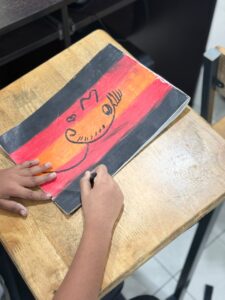
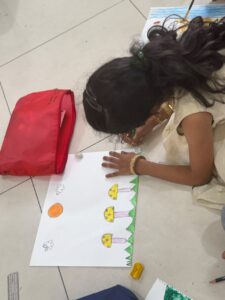
Art and Imagination at Our School – Hidden Stars School

Where Creativity, Curiosity and Imagination Come Alive

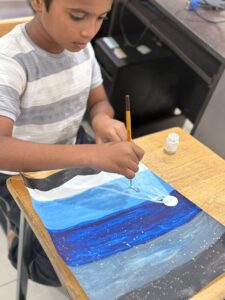
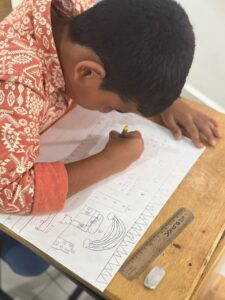
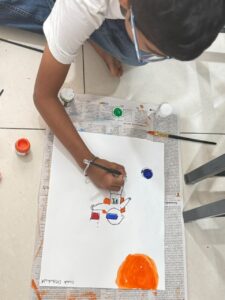
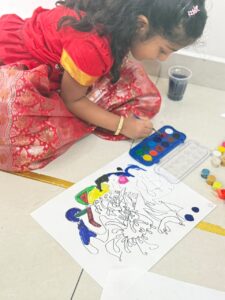
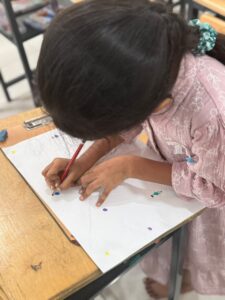
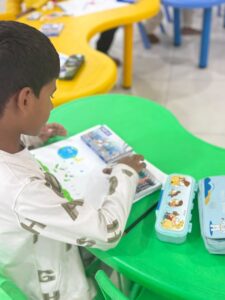
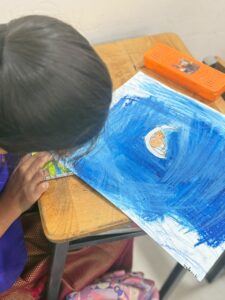
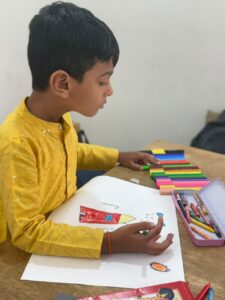
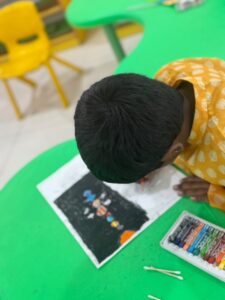
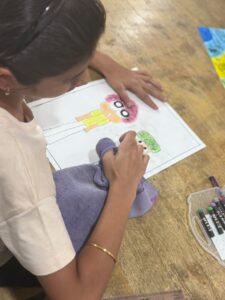
At Hidden Stars School, education is more than textbooks, lessons, and examinations. We believe every child has a unique imagination waiting to be explored. Art and creative expression give children the freedom to think differently, experiment with ideas, express emotions, and discover their individual talents.

From drawing and painting to craft, creative activities, storytelling, music, dance, and imaginative projects, our school encourages students to look at the world with curiosity. Art becomes a way for children to communicate, explore, and learn while developing confidence and essential life skills.

Art and Imagination

Why Art Matters in a Child’s Education

Art plays an important role in childhood development. When children draw, paint, create, build, perform, or imagine something new, they are not simply having fun. They are developing observation, concentration, coordination, problem-solving, and communication skills.

At Hidden Stars School, creative activities are encouraged as an important part of a child's overall learning experience.

Art and Imagination

Art Encourages Self-Expression

Children may sometimes find it difficult to express their thoughts and emotions through words. Art provides another language.

A drawing, painting, craft project, or creative performance can help children communicate what they think, feel, and imagine. This encourages self-expression while helping them become more comfortable sharing their ideas.

Art and Imagination

Imagination Builds Creative Thinking

Imagination allows children to ask questions such as:

“What if?”

“Why not?”

“Can I create something different?”

These questions are at the heart of creative learning. By giving children opportunities to imagine different possibilities, we encourage them to develop flexible thinking and explore solutions in their own unique ways.

Art and Imagination

Learning Through Colours, Shapes and Creativity

Art activities can make learning more engaging and interactive. Children can explore colours, shapes, patterns, textures, and designs while developing their creative abilities.

A simple art activity can introduce concepts from different areas of learning. For example, creating a nature-themed drawing can encourage children to observe plants and animals, while designing shapes can reinforce early mathematical concepts.

This connection between creativity and academics helps children experience learning as something active and enjoyable.

Art and Imagination

Encouraging Every Child to Be Creative

Not every child will become an artist—and that is perfectly fine.

The purpose of art education is not simply to produce perfect drawings or paintings. It is about giving children the confidence to try, experiment, make mistakes, and create something of their own.

At Hidden Stars School, we encourage children to focus on the creative process rather than worrying about whether their work looks exactly like someone else's.

A child's unique idea can be just as valuable as the finished artwork.

Art and Imagination

Imagination and Storytelling

Stories open the door to imagination.

When children listen to or create stories, they begin to imagine characters, places, situations, and possibilities. Storytelling activities can help develop vocabulary, communication skills, listening abilities, and creative thinking.

Students can be encouraged to:

These activities turn imagination into an interactive learning experience.

Art and Imagination

Art, Craft and Hands-On Learning

Children learn effectively when they can touch, create, build, and experiment.

Craft activities provide opportunities to work with different materials and develop fine motor skills. Cutting, folding, colouring, painting, arranging, and assembling require concentration and coordination.

More importantly, hands-on activities give children the satisfaction of creating something themselves.

Whether it is a classroom craft project, a seasonal activity, a nature-inspired artwork, or a collaborative creation, every project can become an opportunity to learn.

Art and Imagination

Building Confidence Through Creativity

Imagine a child proudly presenting a drawing or explaining a handmade project to classmates.

That moment can build confidence.

Creative activities give children opportunities to make decisions and share their work. When teachers and classmates appreciate their efforts, children learn that their ideas have value.

Over time, this can encourage them to participate more actively in classroom discussions, projects, performances, and other activities.

Art and Imagination

Art as a Collaborative Experience

Creativity does not always have to be an individual activity.

Group art projects can teach children how to share materials, listen to others, exchange ideas, divide responsibilities, and work toward a common goal.

Collaborative murals, group craft projects, classroom displays, performances, and creative presentations can make children understand that different ideas can come together to create something meaningful.

Art and Imagination

Creating a Space Where Imagination Can Grow

A child's imagination grows when they are given the freedom to explore.

At Hidden Stars School, we aim to create an environment where students can be curious, creative, and confident. Teachers can encourage students to ask questions, experiment with ideas, and look at familiar subjects from new perspectives.

The goal is to make creativity a natural part of school life—not something limited to an occasional art period.

Art and Imagination

Beyond the Classroom

Art and imagination can connect children with the world around them.

Nature walks can inspire drawings. Festivals can inspire crafts. Stories can lead to performances. Science topics can become creative models. Everyday experiences can become writing, painting, music, or dramatic expression.

This approach helps children understand that creativity is not confined to a classroom.

It is part of everyday life.

Art and Imagination

The Hidden Stars School Approach

At Hidden Stars School, we believe education should help children discover not only what they know but also what they can imagine and create.

Our focus on creative learning encourages students to:

Every child has something unique to offer. Our role is to provide the encouragement and opportunities that help those abilities shine.

Let Their Imagination Shine

A child's imagination can turn a blank sheet of paper into an entire world.

A few colours can become a story. A simple craft project can become an invention. A classroom activity can become an opportunity to discover a new talent.

At Hidden Stars School, we celebrate these moments because creativity is an important part of growing, learning, and discovering oneself.

When children are encouraged to imagine, they learn to see possibilities. When they are encouraged to create, they learn to believe in their ideas.

Because every child is a star—and every imagination has a story waiting to shine.

Frequently Asked Questions

1. Why is art important for school children?

Art encourages self-expression, creativity, observation, concentration, coordination, and independent thinking. It also gives children opportunities to explore ideas in their own way.

2. How does art support academic learning?

Art can make learning more interactive by connecting creative activities with subjects such as language, science, mathematics, and environmental studies. Children can understand concepts through drawing, models, storytelling, and hands-on projects.

3. Does every child need to be good at drawing?

No. Art education is not about creating perfect drawings. It is about encouraging children to experiment, express ideas, develop creativity, and enjoy the process of making something.

4. How does imagination help children?

Imagination encourages children to explore possibilities, think creatively, develop stories, solve problems, and look at situations from different perspectives.

5. Can art help children build confidence?

Yes. Completing creative projects and sharing their work can give children a sense of achievement and encourage them to express their ideas more confidently.

6. What types of creative activities can children participate in?

Creative activities can include drawing, painting, colouring, craft, storytelling, music, dance, drama, creative writing, model-making, and collaborative art projects.

7. How can parents encourage creativity at home?

Parents can provide children with simple art materials, encourage storytelling, allow them to explore hobbies, visit creative spaces, read together, and give them opportunities to experiment without focusing only on the final result.

8. How does Hidden Stars School encourage creativity?

Hidden Stars School encourages creative expression through art, imagination, hands-on activities, storytelling, projects, and opportunities for students to explore and share their ideas.

9. Is creative learning suitable for younger children?

Yes. Creative activities can be adapted to different ages and abilities. Simple drawing, colouring, music, movement, storytelling, and craft activities can help younger children explore their creativity.

10. What is the role of teachers in developing imagination?

Teachers can encourage imagination by asking open-ended questions, allowing students to explore different ideas, appreciating individual creativity, and creating opportunities for experimentation and collaborative learning.

Conclusion

Art and imagination are powerful parts of childhood. At Hidden Stars School, we strive to create learning experiences where children can explore, create, express, and grow with confidence.

By nurturing creativity alongside academic learning, we help children discover their interests, develop new skills, and understand that there can be many ways to look at the world.

Hidden Stars School – where young minds explore, imagine, create, and shine.

Learning Beyond the Classroom: Grade 5 Students Explore the Historic Undavalli Caves – Hidden Stars School

Learning is not limited to classrooms, textbooks, and examinations. Some of the most meaningful educational experiences happen when children step outside the school environment and discover the world around them. At Hidden Stars School, Guntur, we believe that children learn best when they can explore, observe, question, and experience concepts in real-life settings.

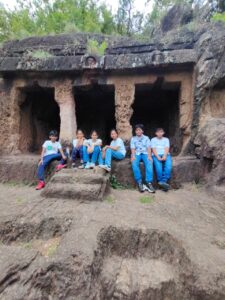
Our Grade 5 students recently enjoyed an exciting educational field trip to the magnificent Undavalli Caves, turning a history lesson into an unforgettable learning adventure.

A Journey from the Classroom to History

History can sometimes feel like a collection of dates, names, and facts in a textbook. But when students actually stand before an ancient monument, the past becomes much more meaningful.

The Grade 5 explorers of Hidden Stars School had the opportunity to visit the Undavalli Caves and experience the fascinating world of ancient rock-cut architecture. The visit encouraged students to observe the structure, understand its historical importance, and appreciate the creativity and skills of people from earlier times.

Instead of simply reading about heritage sites, our students experienced history up close.

Discovering the Magnificent Undavalli Caves

Located near Vijayawada in Andhra Pradesh, the Undavalli Caves are famous for their impressive rock-cut architecture. The caves are carved into a sandstone hill and represent an important part of the region's cultural and architectural heritage.

The site provided our students with an opportunity to look carefully at architectural details, formations, sculptures, and the way the caves were created from natural rock.

For young learners, such an experience can inspire many questions:

These questions transform a simple field trip into an active learning experience.

Learning Through Observation and Exploration

At Hidden Stars School, we encourage children to become curious learners. A field trip provides the perfect environment for this approach.

During the visit, students could observe their surroundings, discuss what they noticed, listen to explanations, and share their thoughts with classmates. These activities encourage children to connect classroom concepts with the real world.

Such experiences can help develop:

More Than a Field Trip

An educational excursion is more than a break from the regular school routine. When thoughtfully planned, it becomes an extension of the classroom.

The Undavalli Caves offered our Grade 5 students a chance to connect subjects such as history, geography, art, architecture, and culture. They could see how different areas of learning can come together in one real-world experience.

The trip also encouraged students to understand the importance of protecting historical monuments. Heritage sites are valuable links to our past, and visiting them can help children understand why preservation and responsible tourism matter.

Encouraging Experiential Learning

At Hidden Stars School, our philosophy, “Let’s Unlearn!”, encourages children to move beyond conventional learning and discover knowledge through exploration.

Experiential learning allows students to learn by doing, seeing, discussing, and reflecting. Whether children are participating in classroom activities, experiments, sports, creative projects, or educational trips, every experience can become an opportunity to learn.

Our approach focuses on helping children Explore, Discover, Learn, and Excel.

The Undavalli Caves field trip perfectly reflected this philosophy. Students were not simply learning about history—they were experiencing it.

Undavalli Caves

Creating Memories Along the Way

Educational trips also create wonderful memories. Exploring a new place with classmates, sharing observations, asking questions, and discovering something fascinating together can make learning enjoyable.

For our Grade 5 students, the visit to Undavalli Caves was an opportunity to combine education with adventure. It encouraged them to look at history from a different perspective and understand that learning can happen anywhere.

As educators, we want children to remember not only what they learned but also how they felt while learning it.

Why Learning Beyond the Classroom Matters

The world itself is a classroom. Museums, historical monuments, nature parks, science centres, farms, libraries, and communities can all become learning spaces.

Field trips can help children:

  1. Connect theoretical knowledge with real-world experiences.
  2. Develop curiosity and independent thinking.
  3. Improve teamwork and social interaction.
  4. Appreciate culture, history, and heritage.
  5. Build confidence through exploration.
  6. Make learning more engaging and memorable.

At Hidden Stars School, we believe these experiences contribute to the holistic development of every child.

Conclusion

The Grade 5 visit to the Undavalli Caves was much more than a school excursion. It was a journey into history, architecture, culture, curiosity, and discovery.

The experience reminded us of something important: the best lessons aren't always found in textbooks—sometimes, they are carved in stone.

At Hidden Stars School, we continue to create opportunities where children can explore the world, discover new ideas, and learn through meaningful experiences.

Because when children experience learning, they don't just remember it—they live it.

Frequently Asked Questions

1. Why are field trips important for school students?
Field trips provide real-world learning experiences. They help students connect classroom concepts with places, people, objects, and situations they can observe directly.

2. What can students learn from visiting historical places like Undavalli Caves?
Students can learn about history, architecture, culture, heritage conservation, geography, and ancient construction techniques while developing observation and critical-thinking skills.

3. How does experiential learning benefit children?
Experiential learning encourages children to learn through observation, participation, exploration, and reflection. It can make concepts more engaging and easier to connect with real life.

4. Why should children learn about historical monuments?
Learning about historical monuments helps children understand their cultural heritage and appreciate the achievements of earlier generations. It can also encourage responsible attitudes toward heritage preservation.

5. How does Hidden Stars School encourage learning beyond textbooks?
Hidden Stars School promotes child-centred and experiential learning through hands-on activities, projects, educational outings, creative experiences, and opportunities for children to explore and ask questions.

6. Is the Undavalli Caves visit suitable as an educational activity?
Yes. A guided educational visit can give students opportunities to observe rock-cut architecture, learn about local heritage, discuss historical concepts, and experience learning outside the classroom.

7. What skills can students develop during educational trips?
Educational trips can support communication, teamwork, observation, problem-solving, curiosity, confidence, social interaction, and independent thinking.

8. How does learning outside the classroom create lasting memories?
Children often remember experiences that involve discovery, participation, and emotion. Visiting an interesting place with classmates can make academic concepts more meaningful and memorable.

About Hidden Stars School

Hidden Stars School, Guntur, is committed to creating a friendly, child-centred learning environment where children are encouraged to explore, discover, question, and grow at their own pace.

📞 Phone: +91 7674892537
📧 Email: hiddenstars20@gmail.com
🌐 Website: hiddenstars.in

Hidden Stars School – Let’s Unlearn! Explore. Discover. Learn. Excel.

Top 10 Questions to Ask Before Choosing a Preschool in Guntur

Choosing the right preschool is one of the most important decisions parents make during a child’s early years. A good preschool should provide more than academics—it should create a safe, friendly, and stimulating environment where children can develop confidence, independence, communication skills, creativity, and social awareness.

If you are looking for a preschool in Guntur, asking the right questions before admission can help you understand whether a school truly matches your child’s needs. Here are the top 10 questions parents should ask.

1. What Teaching Methodology Does the Preschool Follow?

Ask whether the school follows Montessori, play-based, activity-based, or another educational approach. More importantly, understand how the methodology is used in everyday learning.

At Hidden Stars School, Guntur, we follow a Montessori learning methodology that encourages children to learn through exploration, hands-on activities, observation, and independent thinking. Our philosophy, “Let’s Unlearn!”, encourages children to explore, question, think, and discover rather than simply memorize information.

2. Is the Learning Environment Child-Centred?

Young children learn best when they are actively involved in the learning process. Ask how much freedom children have to choose activities, explore materials, ask questions, and learn at their own pace.

A child-centred preschool recognizes that every child develops differently. Teachers should act as facilitators who guide children instead of expecting every child to learn in exactly the same way.

3. What Is the Teacher-to-Child Ratio?

The number of children assigned to each teacher can significantly affect the quality of individual attention. Ask about classroom strength and how teachers manage different learning needs.

A suitable teacher-to-child ratio allows educators to observe children closely, understand their interests, provide guidance, and support their social and emotional development.

4. How Does the Preschool Support Social and Emotional Development?

Preschool is not only about learning letters and numbers. Children also learn how to communicate, share, cooperate, express feelings, solve small conflicts, and build friendships.

Ask how teachers help children develop emotional confidence and positive relationships. Activities involving group play, storytelling, collaborative work, and classroom responsibilities can help children develop important life skills.

5. What Activities Are Included in the Daily Routine?

A balanced preschool routine should include opportunities for movement, creative expression, practical activities, language development, sensory exploration, and independent learning.

Ask to see a typical daily schedule. At Hidden Stars School, activities are designed to encourage children to explore and learn through meaningful experiences rather than relying only on worksheets or textbook-based instruction.

6. How Safe and Child-Friendly Is the School?

Safety should always be a priority when choosing a preschool. Ask about classroom safety, entry and exit procedures, supervision, hygiene, emergency preparedness, and outdoor play areas.

Parents should also observe whether furniture, learning materials, toilets, play spaces, and other facilities are suitable for young children.

7. How Do Teachers Track a Child’s Development?

Every child develops at a different pace. Ask how the school observes and assesses progress.

Instead of focusing only on test scores, a quality preschool should look at areas such as language, physical development, cognitive skills, creativity, independence, communication, and social-emotional growth.

Regular observation can help teachers understand each child’s strengths and identify areas where additional support may be useful.

8. How Much Communication Will Parents Have With Teachers?

A strong relationship between parents and teachers can make the preschool experience more effective. Ask how the school communicates about a child’s progress, classroom experiences, activities, and important announcements.

Open communication helps parents understand what their child is learning and how they can support development at home.

9. What Are the School’s Values and Educational Philosophy?

A preschool’s philosophy can tell you a lot about its approach to children.

Ask yourself: Does the school encourage curiosity? Does it value independence? Are children allowed to make choices? Are questions welcomed? Does the school focus on overall development rather than academics alone?

At Hidden Stars School, our “Let’s Unlearn!” philosophy reflects our belief that children should have opportunities to explore, think, question, and grow naturally.

10. Does the Preschool Prepare Children for the Next Stage of Education?

Finally, ask how the preschool supports children as they progress to higher classes.

Early education should build a strong foundation for future learning while helping children become confident, independent, curious, and socially comfortable. At Hidden Stars School, our Montessori-inspired approach supports children from Playgroup to Class 5, creating continuity in their learning journey.

Why Choose Hidden Stars School, Guntur?

At Hidden Stars School, Guntur, we believe early education should go beyond traditional teaching methods in a friendly and meaningful way. Our child-centric environment gives children opportunities to explore, discover, question, and learn at their own pace.

Through Montessori learning, hands-on experiences, practical activities, creative exploration, and social interaction, we aim to nurture independence, curiosity, confidence, and a genuine love for learning.

For parents searching for a preschool in Guntur, the best choice is one where your child feels safe, respected, encouraged, and excited to learn every day.

Preschool Activities That Improve Brain Development

The early years of a child's life are filled with curiosity, imagination, and rapid growth. During this stage, every game, story, song, and hands-on activity helps shape the brain. Research shows that the preschool years are a critical period for building neural connections, making quality early learning experiences incredibly valuable.

At Hidden Stars School, Guntur, we believe that children learn best through exploration, play, and meaningful experiences. Guided by our philosophy, "Let's Unlearn!", we provide a Montessori-inspired environment where children develop independence, creativity, confidence, and problem-solving skills while enjoying every moment of learning.

Why Brain Development Matters in Preschool

A child's brain develops faster during the first five years than at almost any other stage of life. Every interaction, conversation, movement, and playful activity strengthens neural pathways that support memory, language, attention, emotional regulation, and creativity. Responsive relationships and engaging play are especially important during these years.

This is why preschool should never be limited to worksheets or memorization. Instead, children need experiences that encourage them to think, explore, question, and discover.

1. Storytelling and Reading

Reading stories introduces children to new words, ideas, and emotions.

Benefits include:

  • Builds vocabulary
  • Improves listening skills
  • Enhances imagination
  • Strengthens memory
  • Develops communication skills

At Hidden Stars School, interactive storytelling sessions encourage children to predict, ask questions, and retell stories, making reading an exciting adventure.

2. Building Blocks and Construction Play

Simple blocks offer countless learning opportunities.

Children learn:

  • Problem-solving
  • Spatial awareness
  • Creativity
  • Hand-eye coordination
  • Logical thinking

Building towers, bridges, and creative structures teaches patience and planning while strengthening cognitive skills.

3. Sensory Play

Sensory activities stimulate multiple areas of the brain simultaneously.

Popular activities include:

  • Sand play
  • Water play
  • Clay modeling
  • Nature exploration
  • Texture discovery

Sensory experiences improve concentration, fine motor skills, and scientific curiosity while making learning enjoyable.

4. Music and Movement

Songs, rhymes, dance, and rhythm activities help children remember patterns and improve coordination.

Music supports:

  • Memory development
  • Language skills
  • Emotional expression
  • Balance and coordination
  • Listening skills

Children naturally enjoy learning through music because it combines movement with fun.

5. Art and Creative Expression

Drawing, painting, coloring, and craft activities encourage children to express themselves freely.

Creative activities help develop:

  • Fine motor skills
  • Decision-making
  • Imagination
  • Focus
  • Confidence

Rather than seeking perfect artwork, we celebrate each child's unique creativity.

6. Puzzle Solving

Age-appropriate puzzles teach children to think critically.

They improve:

  • Logical reasoning
  • Memory
  • Concentration
  • Visual recognition
  • Patience

Completing puzzles gives children a sense of achievement while strengthening their thinking abilities.

7. Outdoor Play

Running, climbing, balancing, and group games are just as important as classroom learning.

Outdoor activities improve:

  • Physical fitness
  • Brain-body coordination
  • Social interaction
  • Confidence
  • Emotional wellbeing

Active play also helps children stay focused during indoor learning sessions.

8. Pretend Play

Children naturally enjoy pretending to be doctors, teachers, chefs, or shopkeepers.

Role play develops:

  • Creativity
  • Communication
  • Emotional intelligence
  • Social skills
  • Problem-solving

Through imaginative play, children learn empathy, cooperation, and confidence.

9. Practical Life Activities

One of the key features of Montessori education is practical life learning.

Children enjoy activities like:

  • Pouring water
  • Folding clothes
  • Watering plants
  • Arranging materials
  • Cleaning tables

These simple tasks develop concentration, independence, coordination, and responsibility.

10. Conversation and Question Time

One of the most powerful brain-building activities is simply talking with children.

Encouraging children to ask questions and express their ideas helps improve:

  • Critical thinking
  • Language development
  • Emotional understanding
  • Confidence

Meaningful conversations strengthen memory and reasoning skills through everyday interactions.

How Hidden Stars School Supports Brain Development

At Hidden Stars School, Guntur, every classroom experience is thoughtfully designed to nurture the whole child.

Our Montessori-inspired learning environment offers:

  • Play-based learning
  • Hands-on Montessori materials
  • Interactive storytelling
  • Music and movement sessions
  • Creative art activities
  • Practical life experiences
  • Outdoor exploration
  • Individual attention
  • Child-led discovery
  • Safe and joyful classrooms

We believe every child has unique strengths. Our teachers act as facilitators, encouraging children to explore, think independently, and develop a lifelong love for learning.

Final Thoughts

Brain development doesn't happen through pressure or endless worksheets—it grows through joyful experiences, meaningful conversations, movement, creativity, and play. The right preschool creates opportunities for children to build confidence, curiosity, and essential life skills every single day.

If you're looking for a nurturing preschool in Guntur where your child can learn, grow, and thrive, Hidden Stars School is here to provide a strong foundation for lifelong success.

Enroll Today at Hidden Stars School

Helping Children Grow in a Friendly Way

At Hidden Stars School, Guntur, we believe early education should go beyond traditional teaching methods. Guided by our philosophy, "Let's Unlearn!", we create a child-centric learning environment where every child is free to explore, think, question, and grow at their own pace. Our Montessori learning methodology nurtures independence, curiosity, confidence, and a genuine love for learning from Playgroup to Class 5.

Admission Enquiry: https://hiddenstars.in/admission-enquiry/
Call Us: +91 7674892537

Frequently Asked Questions (FAQs)

1. Which preschool activities help improve brain development?
Activities such as storytelling, puzzles, music, sensory play, block building, outdoor games, art, and practical life exercises strengthen cognitive, language, and motor skills.

2. Why is play important for brain development?
Play encourages children to think creatively, solve problems, communicate effectively, and develop strong neural connections that support lifelong learning.

3. At what age does brain development grow the fastest?
The first five years of life are the most important period for brain development, making high-quality preschool education especially valuable.

4. How does Montessori education support brain development?
Montessori learning promotes hands-on exploration, independence, concentration, critical thinking, and practical life skills, all of which contribute to healthy brain development.

5. How do storytelling activities benefit preschoolers?
Storytelling improves vocabulary, listening, imagination, comprehension, memory, and communication skills while encouraging curiosity.

6. Does outdoor play improve learning?
Yes. Outdoor activities enhance physical coordination, attention, emotional well-being, teamwork, and overall cognitive development.

7. Why should parents choose Hidden Stars School in Guntur?
Hidden Stars School offers a safe, nurturing Montessori-inspired environment with play-based learning, experienced educators, personalized attention, and holistic development from Playgroup to Class 5.

Should My Child Attend Daycare or Play School?

As parents, one of the biggest decisions you'll make during your child's early years is choosing the right environment for their growth. Many parents often wonder: Should my child attend daycare or play school? While both options provide care for young children, they serve different purposes and cater to different developmental needs.

Understanding these differences can help you make the best decision for your child and your family's lifestyle.

At Hidden Stars School, Guntur, we believe that early childhood is a precious stage where children develop the foundation for lifelong learning. Our Montessori-inspired Playgroup provides a safe, nurturing, and stimulating environment where children aged 2+ explore, discover, and grow through joyful learning.

Understanding the Difference Between Daycare and Play School

Although daycare and play school may seem similar, their primary goals are quite different.

What is Daycare?

Daycare is mainly designed to provide supervision and care for children while parents are at work. It focuses on ensuring children's safety, comfort, meals, naps, and recreational activities throughout the day.

Daycare centres typically accommodate children from infancy to preschool age and often have extended operating hours to support working families.

What is a Play School?

A play school focuses on early childhood education rather than childcare alone. It introduces children to structured learning through play, hands-on activities, storytelling, music, movement, art, and social interaction.

The objective is to prepare children for preschool and primary school while nurturing their emotional, cognitive, language, and social development.

Daycare vs Play School: Key Differences

Feature Daycare Play School
Primary Purpose Childcare Early Education
Age Group Infants to Preschool Usually 2–5 Years
Learning Activities Limited Structured Learning Through Play
Social Development Moderate Strong Focus
School Readiness Basic High
Operating Hours Full Day Half Day or Flexible Sessions

Both options are valuable, but your choice depends on your child's needs and your family's routine.

When is Daycare a Better Choice?

Daycare may be the right option if:

A quality daycare ensures children receive proper care while parents manage their professional responsibilities.

When is Play School the Better Choice?

If your child is around two years or older and is ready to begin exploring the world around them, play school offers several developmental advantages.

Play school helps children:

Rather than simply caring for children, a play school nurtures their curiosity and love for learning.

Benefits of Play School for Young Children

1. Early Learning Through Play

Children learn best when they play.

Play-based learning introduces concepts like numbers, letters, colours, shapes, and problem-solving naturally through engaging activities rather than formal instruction.

2. Builds Social Skills

Children interact with classmates, learn to share toys, cooperate in group activities, and understand empathy.

These social experiences prepare them for future classroom environments.

3. Encourages Independence

Simple activities like:

help children become more independent and confident.

4. Improves Language Development

Songs, rhymes, storytelling, conversations, and role play significantly improve vocabulary, listening, and communication skills.

Children become comfortable expressing their thoughts and emotions.

5. Develops Motor Skills

Play schools include activities that strengthen both fine and gross motor skills, such as:

These activities support healthy physical development.

6. Creates a Love for Learning

Positive early learning experiences make children excited about school instead of fearful.

When learning is joyful, children become naturally curious and eager to explore new ideas.

Can a Child Attend Both Daycare and Play School?

Yes.

Many working parents choose a combination of both.

A child may attend play school during the morning for structured learning and spend the afternoon in daycare where they can rest, eat, and continue supervised activities.

This approach provides both educational and practical benefits.

Signs Your Child is Ready for Play School

Every child develops at their own pace, but some common signs include:

Remember that every child is unique. Readiness is not only about age but also emotional and developmental maturity.

What Should Parents Look for in a Play School?

Choosing the right play school is one of the most important decisions for your child's future.

Consider these factors:

Safe Environment

Look for secure classrooms, child-friendly furniture, hygiene, and trained staff.

Qualified Teachers

Teachers should understand child development and encourage learning with patience and care.

Play-Based Curriculum

Children should learn through activities rather than pressure or rote memorisation.

Small Class Sizes

Smaller groups allow teachers to provide individual attention.

Parent Communication

Regular updates help parents stay involved in their child's learning journey.

Holistic Development

The school should focus on emotional, physical, cognitive, creative, and social development—not just academics.

Why Hidden Stars School, Guntur is the Right Choice

At Hidden Stars School, Guntur, we create a safe, caring, and joyful environment where every child feels respected, supported, and encouraged to learn.

Guided by our philosophy, "Let's Unlearn!", we believe education should inspire curiosity rather than pressure. Our Montessori-inspired learning approach helps children discover the world through exploration, movement, creativity, and meaningful experiences.

Our Playgroup in Guntur is thoughtfully designed for children aged 2+, providing the perfect balance of care, structure, and joyful learning.

Children at Hidden Stars benefit from:

Our goal is to help every child develop confidence, independence, curiosity, and a lifelong love for learning.

Final Thoughts

Choosing between daycare and play school doesn't have to be an either-or decision. The right choice depends on your child's age, developmental needs, and your family's daily routine.

If your priority is nurturing your child's learning, confidence, creativity, and school readiness, a quality play school offers invaluable benefits during the early years.

At Hidden Stars School, Guntur, we partner with families to give children the strongest possible start in life. Through our Montessori-inspired approach, caring educators, and engaging learning experiences, we help every child grow into a happy, confident, and capable learner.

Frequently Asked Questions (FAQs)

1. What is the difference between daycare and play school?

Daycare primarily provides childcare and supervision, while a play school focuses on early education, social development, and preparing children for formal schooling through play-based learning.

2. What is the right age to join a play school?

Most children can start play school from 2 years of age, depending on their developmental readiness and comfort with short periods away from parents.

3. Can my child attend both daycare and play school?

Yes. Many families combine play school for structured learning with daycare for extended childcare, especially when both parents work.

4. How does Montessori education benefit young children?

Montessori education encourages independence, creativity, problem-solving, confidence, and hands-on learning while respecting each child's unique pace of development.

5. Will play school help my child prepare for primary school?

Yes. Play schools build early literacy, numeracy, communication, social, and emotional skills that make the transition to primary school smoother.

6. How can I tell if my child is ready for play school?

Signs include curiosity, interest in playing with others, basic communication skills, willingness to explore new environments, and the ability to stay away from parents for short periods.

7. What should I look for when choosing a play school in Guntur?

Look for a safe environment, qualified teachers, Montessori or play-based curriculum, small class sizes, engaging activities, and strong communication between teachers and parents.

8. Why choose Hidden Stars School, Guntur for Playgroup?

Hidden Stars School offers a Montessori-inspired Playgroup for children aged 2+, focusing on early literacy, numeracy, creativity, social development, and joyful learning in a safe, caring, and child-centred environment.

Healthy Lunch Box Ideas for Play School Children

Healthy Lunch Box Ideas for Play School Children

Every parent wants their child to grow up healthy, active, and full of energy. However, getting preschoolers to eat a balanced meal every day can be challenging. Children are naturally drawn to colorful, tasty foods, while parents focus on nutrition and health. Packing a lunch box that is both nutritious and appealing often feels like a daily puzzle.

At Hidden Stars School, Guntur, we understand that healthy eating plays an important role in a child's overall development. Proper nutrition supports physical growth, brain development, immunity, and concentration in the classroom. A wholesome lunch box also helps children develop healthy eating habits that last a lifetime.

If you're looking for simple, delicious, and nutritious lunch box ideas for your little one, here are ten easy options that children love.

Why a Healthy Lunch Box Matters

Play school children are constantly learning, exploring, and playing. Their growing bodies need a balanced mix of carbohydrates, proteins, healthy fats, vitamins, and minerals.

A nutritious lunch helps children:

Small, colorful, and easy-to-eat meals often work best for preschoolers.

1. Stuffed Paratha

Parathas are one of the easiest and most loved lunch box options.

Choose healthy fillings like:

Serve with homemade curd or a mild chutney for added nutrition. Preparing the stuffing the previous night makes morning cooking much easier.

2. Paneer Bhurji Wrap

Paneer is an excellent source of protein and calcium for growing children.

Prepare a simple paneer bhurji using onions, tomatoes, carrots, and capsicum with mild spices. Wrap it inside a soft chapati.

The wrap is easy for little hands to hold and minimizes food wastage during lunchtime.

3. Lemon Rice

Lemon rice is quick to prepare and full of flavor.

Made with rice, curry leaves, mustard seeds, turmeric, peanuts (if there are no allergies), and fresh lemon juice, it provides carbohydrates, healthy fats, and Vitamin C.

Pair it with cucumber slices or fruit to complete the meal.

4. Vegetable Pulao

Vegetable pulao is a wholesome one-pot meal packed with colorful vegetables.

Include vegetables such as:

The mild flavors make it suitable for preschool children while ensuring they receive important vitamins and fiber.

5. Besan or Moong Dal Chilla

Protein-rich chillas make excellent lunch box meals.

You can make them more nutritious by adding:

Roll them into small wraps or cut them into bite-sized pieces for easier eating.

6. Mini Idlis

Mini idlis are soft, healthy, and fun to eat.

Steam them the previous evening and lightly toss them with ghee and mild podi or serve with coconut chutney packed separately.

Children enjoy finger foods, making mini idlis a perfect preschool lunch.

7. Chickpea Salad or Chickpea Wrap

Boiled chickpeas are packed with protein and fiber.

Mix mashed chickpeas with:

Serve it as a salad or wrap it inside a chapati for a filling and nutritious meal.

8. Vegetable Poha

Poha is light, nutritious, and ready in just a few minutes.

Add vegetables like:

A side of banana, apple slices, or grapes makes the meal more balanced.

9. Healthy Bento Box

Children love variety.

A simple bento-style lunch box may include:

The colorful presentation encourages children to finish their meals happily.

10. Mini Paneer Uttapam

Mini uttapams are soft, filling, and highly nutritious.

Top them with:

Arrange the vegetables into smiley faces or fun shapes to make lunchtime exciting.

Tips to Pack a Nutritious Lunch Box

A healthy lunch box doesn't have to be complicated. Following a few simple practices can make meal preparation easier.

Balance Every Meal

Include:

Prepare Ahead

Morning rush becomes easier if you:

Use Compartment Lunch Boxes

Separate compartments prevent foods from mixing together and keep meals fresh and attractive.

Add Color

Bright, colorful meals naturally attract children.

Include fruits like:

Colorful vegetables also make meals more inviting.

Keep Portions Small

Play school children eat better when food is served in smaller portions. Bite-sized pieces are easier to manage and reduce wastage.

Avoid Junk Foods

Limit:

Instead, choose homemade alternatives that provide sustained energy.

Creating Healthy Eating Habits Early

Healthy eating begins at home and continues at school. When children regularly enjoy balanced meals, they naturally develop positive food habits.

Parents can encourage healthy eating by:

These small habits help children become confident and independent eaters.

Healthy Learning Begins with Healthy Nutrition

At Hidden Stars School, Guntur, we believe education extends beyond books and classrooms. Guided by our philosophy, "Let's Unlearn!", we create a child-centric Montessori environment where children develop independence, curiosity, creativity, and confidence.

Along with joyful learning experiences from Playgroup to Class 5, we recognize the importance of proper nutrition in supporting every child's physical and cognitive development. Healthy meals, active play, hands-on learning, and emotional well-being together create the foundation for lifelong success.

When children receive the right nutrition and the right learning environment, they are empowered to explore, discover, and grow into confident lifelong learners.

Frequently Asked Questions

1. What should a healthy lunch box for play school children include?

A balanced lunch box should contain carbohydrates, protein, fruits, vegetables, and healthy fats to provide sustained energy and support overall growth.

2. What are some quick Indian lunch box ideas for preschoolers?

Parathas, paneer wraps, lemon rice, vegetable pulao, poha, mini idlis, chillas, and mini uttapams are excellent nutritious options.

3. How can I encourage my child to finish their lunch?

Pack colorful meals, create fun food shapes, include familiar favorites, and offer smaller portions that are easy to eat.

4. Can I prepare lunch box items the night before?

Yes. You can prepare fillings, chop vegetables, cook rice, knead dough, or steam idlis in advance to save time during busy mornings.

5. How important is protein in a preschool child's lunch?

Protein supports muscle growth, brain development, immunity, and overall physical development. Paneer, chickpeas, dal, curd, and besan are excellent vegetarian protein sources.

6. Should I include fruits every day?

Yes. Fresh seasonal fruits provide vitamins, antioxidants, and fiber that support immunity and healthy digestion.

7. What foods should I avoid packing?

Avoid highly processed snacks, sugary drinks, chocolates, excessive sweets, and deep-fried foods. Homemade, fresh meals are always a healthier choice.

8. Why is nutrition important during early childhood education?

Proper nutrition improves concentration, supports brain development, builds strong immunity, and helps children actively participate in learning and play throughout the school day.

How Montessori Activities Support Kindergarten Development

The kindergarten years are among the most important stages in a child's educational journey. During this period, children develop the foundational skills they need for academic success, emotional well-being, and lifelong learning. While many teaching methods focus on memorization and structured lessons, the Montessori approach encourages children to learn naturally through exploration, hands-on activities, and real-life experiences.

At Hidden Stars School, Guntur, we believe early education should go beyond traditional teaching methods. Guided by our philosophy, "Let's Unlearn!", we create a child-centric learning environment where every child is encouraged to explore, think independently, ask questions, and grow at their own pace. Our Montessori learning methodology nurtures curiosity, confidence, independence, and a genuine love for learning from Playgroup to Class 5.

Understanding Montessori Activities

Montessori activities are carefully designed learning experiences that help children develop practical skills while encouraging independent thinking. Unlike conventional classroom activities, Montessori learning allows children to choose meaningful tasks, solve problems, and learn through direct experience.

These activities are age-appropriate, hands-on, and structured to develop the whole child rather than focusing only on academic performance.

Why Montessori Activities Matter in Kindergarten

Kindergarten is much more than learning the alphabet and counting numbers. It is a time when children develop essential life skills, emotional intelligence, communication abilities, and social confidence.

Montessori activities support these areas by encouraging children to become active participants in their own learning journey. Instead of simply receiving information, children learn by doing, observing, experimenting, and discovering.

This approach helps children retain knowledge more effectively while building confidence and enthusiasm for learning.

Key Montessori Activities That Support Kindergarten Development

1. Practical Life Activities

Practical life exercises are among the most important components of Montessori education. These activities teach children everyday skills that build independence and responsibility.

Examples include:

These simple tasks improve concentration, hand-eye coordination, fine motor skills, and self-confidence. Children also develop patience, discipline, and responsibility while learning to care for themselves and their surroundings.

2. Sensorial Activities

Young children learn best through their senses. Montessori sensorial activities help children explore differences in size, shape, texture, sound, colour, weight, and smell.

These experiences strengthen:

Sensorial learning also prepares children for later mathematical and scientific concepts by helping them recognize patterns and relationships.

3. Language Development Activities

Language learning begins long before children start reading books. Montessori classrooms provide rich language experiences through storytelling, conversations, phonics activities, picture cards, object naming, songs, and reading exercises.

These activities help children:

A strong language foundation also enhances communication and social interaction.

4. Mathematics Through Hands-On Learning

Montessori mathematics introduces abstract concepts using concrete learning materials. Children physically manipulate objects before learning numbers on paper.

They explore concepts like:

Hands-on experiences make mathematics enjoyable and easier to understand while reducing anxiety about numbers.

5. Creative Activities

Creativity is an essential part of childhood development.

Children participate in:

Creative activities encourage imagination, emotional expression, confidence, and innovative thinking while improving fine motor skills.

6. Outdoor Exploration

Montessori education recognises that learning extends beyond classroom walls.

Outdoor activities encourage children to:

Nature-based learning also helps children develop respect for the environment and curiosity about the world around them.

7. Social Learning Activities

Kindergarten is where children begin building friendships and learning how to interact positively with others.

Group activities teach children to:

These experiences build emotional intelligence and prepare children for collaborative learning in later years.

The Hidden Stars School Approach

At Hidden Stars School, our Montessori-inspired classrooms are thoughtfully designed to encourage exploration, independence, and joyful learning.

Child-Centric Environment

Every child is unique.

We provide a warm, welcoming, and nurturing environment where children feel safe, respected, and valued. Rather than expecting every child to learn in the same way, we understand individual learning styles and support each child's natural development.

Our teachers carefully observe children's interests and provide opportunities that match their readiness and abilities.

Montessori Learning Methodology

Our philosophy, "Let's Unlearn!", reflects our belief that education should encourage curiosity rather than memorisation.

Children learn through:

This unconventional learning approach helps children become confident, motivated, and lifelong learners.

Benefits of Montessori Activities in Kindergarten

Children who participate in Montessori learning often develop important lifelong skills that extend beyond academics.

These include:

Greater Independence

Children learn to complete tasks independently, make choices responsibly, and take ownership of their learning.

Improved Concentration

Montessori activities encourage children to focus on one task at a time, helping develop attention span and self-discipline.

Stronger Problem-Solving Skills

Rather than providing immediate answers, teachers guide children to explore different solutions independently.

Higher Self-Confidence

Successfully completing activities gives children a sense of achievement that builds confidence and resilience.

Love for Learning

Because learning is enjoyable and meaningful, children develop curiosity and enthusiasm that continues throughout their educational journey.

The Importance of Choosing the Right Kindergarten

Parents searching for a kindergarten should look beyond academic results. A quality early learning environment should support intellectual, emotional, social, and physical development equally.

Schools that adopt Montessori principles provide children with opportunities to become independent thinkers, confident communicators, and responsible individuals.

Visiting classrooms, interacting with teachers, and understanding the school's educational philosophy can help parents make informed decisions.

Why Parents Choose Hidden Stars School in Guntur

Families trust Hidden Stars School because we focus on nurturing every aspect of a child's growth.

Our strengths include:

We believe education should inspire children to enjoy learning rather than fear it.

Conclusion

Montessori activities provide children with much more than academic knowledge. They develop independence, confidence, creativity, communication skills, emotional intelligence, and critical thinking through meaningful experiences.

At Hidden Stars School, Guntur, we proudly follow a Montessori learning approach that allows children to explore their potential naturally. Guided by our philosophy, "Let's Unlearn!", we prepare children not only for primary education but also for a lifetime of joyful learning, curiosity, and personal growth.

When children are given the freedom to discover, create, and learn at their own pace, they build the confidence and skills needed to succeed in school and beyond.

Frequently Asked Questions (FAQs)

1. What are Montessori activities?

Montessori activities are hands-on, child-focused learning experiences designed to develop independence, practical life skills, creativity, problem-solving, and academic readiness through exploration.

2. How do Montessori activities benefit kindergarten children?

They help children improve concentration, confidence, communication, fine motor skills, social interaction, critical thinking, and a lifelong love for learning.

3. Why is practical life learning important in Montessori education?

Practical life activities teach children everyday skills, responsibility, independence, coordination, and self-confidence while preparing them for real-world situations.

4. How is Hidden Stars School different from traditional kindergartens?

Hidden Stars School follows a child-centric Montessori approach where children learn through exploration, self-discovery, and meaningful experiences instead of rote memorization.

5. Why should parents choose Hidden Stars School in Guntur?

Hidden Stars School offers a nurturing environment, Montessori-inspired education, experienced teachers, individualized attention, and a holistic approach that supports every child's academic, social, and emotional development.

Kindergarten School Near Me in Guntur: Choosing the Right Option

Choosing the right kindergarten school is one of the most important decisions parents make for their child. A kindergarten school serves as the bridge between early childhood and formal education, helping children develop the skills, confidence, and curiosity they need for lifelong learning. If you have been searching for a "Kindergarten School Near Me in Guntur," it is essential to understand what factors make a school the right fit for your child.

At Hidden Stars School, we believe that every child deserves a nurturing environment where learning is joyful, meaningful, and tailored to their individual needs. Our Montessori-inspired approach focuses on developing the whole child through hands-on learning, exploration, and guided discovery.

Why Kindergarten Education Matters

Kindergarten is much more than learning letters and numbers. It is a critical stage where children develop essential social, emotional, cognitive, and physical skills. A quality kindergarten program helps children:

  • Build confidence and independence
  • Develop communication and language skills
  • Learn problem-solving and critical thinking
  • Improve social interaction and teamwork
  • Enhance creativity and imagination
  • Prepare for primary school success

The experiences children have during these formative years can shape their attitude toward learning for years to come.

What to Look for in a Kindergarten School in Guntur

When evaluating kindergarten schools in Guntur, parents should consider several important factors.

1. Child-Centric Learning Approach

Every child learns differently. The best kindergarten schools recognize this and adapt their teaching methods to suit individual learning styles and developmental needs.

At Hidden Stars School, child-centric learning is at the heart of everything we do. We carefully observe each child's interests, strengths, and learning pace to provide personalized guidance and support.

2. Montessori-Based Education

Montessori education is widely recognized for promoting independence, creativity, and self-directed learning. Instead of relying on rote memorization, Montessori classrooms encourage children to learn through exploration and hands-on activities.

Our Montessori-based foundation is supported by structured, age-appropriate learning materials that help children develop:

  • Cognitive abilities
  • Sensory awareness
  • Practical life skills
  • Language development
  • Mathematical understanding

This approach allows children to gain confidence while developing a genuine love for learning.

3. Safe and Nurturing Environment

Safety is a top priority when choosing a kindergarten school. Children learn best when they feel secure, supported, and valued.

Hidden Stars School provides a safe and welcoming environment where children can freely explore, interact, and grow. Our classrooms are designed to encourage curiosity while ensuring comfort and security for every child.

4. Focus on Personality Development

Academic learning is important, but personality development is equally essential during the early years.

At Hidden Stars, we place a strong emphasis on:

  • Communication skills
  • Emotional intelligence
  • Leadership qualities
  • Social interaction
  • Independent thinking

Through guided activities, group participation, and real-world learning experiences, children learn how to express themselves confidently and build meaningful relationships.

5. Qualified and Caring Educators

Teachers play a vital role in a child's educational journey. A good kindergarten school employs trained educators who understand child development and create positive learning experiences.

Our dedicated teachers act as guides and mentors, encouraging children to explore, ask questions, and discover solutions independently while providing the support they need.

Montessori Early Learning at Hidden Stars School

Hidden Stars offers a nurturing playgroup and kindergarten program in Guntur for children aged 2 years and above. We believe that young learners thrive when they are given opportunities to learn through play, movement, exploration, and meaningful interactions.

Our Montessori-inspired early learning program focuses on:

Learning Through Play

Play is one of the most effective ways children learn. Through carefully designed activities, children develop critical thinking, creativity, communication, and social skills.

Sensory Development

Young children learn best through their senses. Our learning materials encourage exploration through touch, sight, sound, and movement, helping children understand the world around them.

Practical Life Activities

Practical life exercises help children build independence and confidence by teaching everyday skills such as organizing, cleaning, pouring, sorting, and self-care routines.

Language and Communication

We create opportunities for children to develop strong language skills through storytelling, conversations, songs, reading activities, and interactive learning experiences.

Social and Emotional Growth

Children learn to cooperate, share, communicate, and resolve conflicts respectfully. These experiences help build emotional resilience and positive social behaviors.

Why Parents Trust Hidden Stars in Guntur

Families across Guntur choose Hidden Stars School because we focus on nurturing the whole child rather than simply delivering academic instruction.

Personalized Learning Support

We understand that every child develops at their own pace. Our teachers provide personalized attention and guidance that encourages steady growth and development.

Montessori-Based Foundation

Our curriculum combines Montessori principles with structured learning experiences that strengthen essential early childhood skills.

Focus on Holistic Development

We emphasize personality development, communication, socio-emotional growth, and independent thinking alongside academic readiness.

Positive Learning Environment

At Hidden Stars, we believe children should never feel pressured or compared to others. We celebrate individual progress and encourage children to learn with confidence and enthusiasm.

Strong Parent-School Partnership

We maintain open communication with parents and work together to support each child's educational journey and overall development.

Choosing the Right Kindergarten School Near You

When searching for a kindergarten school near you in Guntur, visit the campus, observe the classrooms, meet the teachers, and understand the school's educational philosophy. Consider whether the environment feels welcoming, engaging, and supportive for your child.

Look beyond academic achievements and focus on schools that promote independence, creativity, confidence, and emotional well-being. These qualities lay the foundation for future success both inside and outside the classroom.

Conclusion

Finding the right kindergarten school in Guntur can make a significant difference in your child's educational journey. A nurturing environment, child-centric learning approach, qualified educators, and a strong focus on holistic development are key factors to consider.

At Hidden Stars School, we are committed to providing children with a joyful learning experience that builds confidence, curiosity, and a lifelong love for learning. Through our Montessori-inspired approach, safe environment, and personalized support, we help children develop the skills they need to thrive in school and beyond.

Frequently Asked Questions (FAQs)

1. What is the ideal age for kindergarten admission?

Most children begin kindergarten between the ages of 3 and 5 years, depending on the program and developmental readiness.

2. Why is Montessori education beneficial for kindergarten children?

Montessori education promotes independence, hands-on learning, problem-solving skills, creativity, and self-confidence through child-centered activities.

3. How does Hidden Stars School support individual learning needs?

We observe each child's learning style, interests, and pace to provide personalized guidance and support that encourages consistent growth.

4. What skills do children develop in kindergarten?

Children develop language skills, social interaction, emotional intelligence, motor skills, creativity, independence, and early academic foundations.

5. Why should parents choose Hidden Stars School in Guntur?

Hidden Stars offers a Montessori-inspired curriculum, child-centric learning, experienced educators, personality development programs, and a safe, nurturing environment that supports holistic child development.

Montessori vs Traditional Preschools: Which Is Right for Your Child?

Choosing the right preschool is one of the most important decisions parents make during their child’s early years. A preschool lays the foundation for a child’s academic, social, emotional, and cognitive development. Among the many options available, Montessori and traditional preschools are two of the most popular approaches. While both aim to help children learn and grow, they differ significantly in teaching methods, classroom environments, and learning philosophies.

If you are wondering which option is best suited for your child, understanding the key differences between Montessori and traditional preschools can help you make an informed decision.

Understanding the Montessori Learning Approach

The Montessori method is an educational philosophy developed by Dr. Maria Montessori. It focuses on fostering independence, curiosity, and self-directed learning. In a Montessori classroom, children are encouraged to explore, experiment, and discover concepts at their own pace.

Rather than relying on direct instruction alone, Montessori educators guide children toward meaningful learning experiences. Specially designed learning materials allow children to engage with concepts through hands-on activities, helping them develop critical thinking and problem-solving skills naturally.

A key feature of Montessori education is the belief that children learn best when they are actively involved in the learning process. This approach nurtures confidence, self-motivation, and a lifelong love of learning.

What Is a Traditional Preschool?

Traditional preschools typically follow a teacher-led structure where children participate in scheduled lessons, group activities, and age-based learning programs. Teachers introduce concepts through instruction, demonstrations, storytelling, and classroom discussions.

The curriculum is usually designed around specific educational milestones, ensuring children are prepared for kindergarten and future academic requirements. Activities often include arts and crafts, music, circle time, early literacy, and basic mathematics.

Traditional preschools provide a structured environment with clear routines, helping children develop discipline, cooperation, and classroom readiness skills.

Key Differences Between Montessori and Traditional Preschools

1. Learning Style

Montessori Preschool

Children choose activities based on their interests and developmental needs. Learning is self-directed, allowing them to spend more time exploring subjects that capture their curiosity.

Traditional Preschool

Teachers determine lesson plans and guide the learning process. Activities are typically completed as a group, following a predetermined schedule.

2. Classroom Environment

Montessori Preschool

A child-centric environment is at the heart of Montessori education. Classrooms are carefully designed to be warm, welcoming, and nurturing. Children have easy access to learning materials and are encouraged to move freely while exploring activities independently.

Each child is treated as an individual, helping them feel safe, valued, and motivated to thrive.

Traditional Preschool

Traditional classrooms are often organized around group learning areas, with teachers directing activities. While still supportive and engaging, the environment is generally more structured and teacher-focused.

3. Role of the Teacher

Montessori Preschool

Teachers act as guides and facilitators rather than instructors. They observe children closely, identify their interests, and introduce activities that support their development.

Traditional Preschool

Teachers take a more active leadership role by delivering lessons, managing classroom activities, and ensuring all children follow the same learning path.

4. Pace of Learning

Montessori Preschool

Children progress at their own pace. If a child masters a concept quickly, they can move on to more advanced activities. Likewise, they can spend additional time practicing skills without feeling pressured.

Traditional Preschool

Learning generally follows a fixed curriculum and schedule. All children are expected to work through similar activities together.

5. Focus on Independence

Montessori Preschool

Independence is a core principle. Children learn practical life skills such as organizing materials, cleaning up after activities, and making choices about their learning.

Traditional Preschool

While independence is encouraged, the emphasis is often balanced with group participation and teacher-guided instruction.

Benefits of a Montessori Preschool

Montessori education offers several advantages that appeal to many families:

Through exploration, self-discovery, and meaningful everyday experiences, children gain a deeper understanding of concepts while building essential life skills.

Benefits of a Traditional Preschool

Traditional preschools also offer valuable benefits, including:

For children who thrive with clear expectations and structured schedules, a traditional preschool may be an excellent fit.

How to Choose the Right Preschool for Your Child

Every child is unique, and there is no one-size-fits-all answer. When evaluating preschool options, consider your child's personality, learning style, and developmental needs.

A Montessori preschool may be ideal if your child:

A traditional preschool may be a better choice if your child:

Visiting schools, observing classrooms, and speaking with educators can provide valuable insights into which approach aligns best with your child's needs.

The Importance of a Child-Centric Environment

Regardless of the educational philosophy, the quality of the preschool environment plays a significant role in a child's development. Children thrive when they feel safe, respected, and supported.

A nurturing, welcoming, and child-centric setting helps build confidence, encourages exploration, and fosters positive relationships with teachers and peers. When children feel valued, they are more likely to engage enthusiastically in learning and develop a strong foundation for future success.

Conclusion

Both Montessori and traditional preschools offer meaningful opportunities for early childhood development. The right choice depends on your child's personality, learning preferences, and individual needs.

Montessori education emphasizes independence, self-discovery, and experiential learning in a child-centered environment. Traditional preschools focus on structured instruction, group learning, and school readiness. By understanding the strengths of each approach, parents can confidently choose a preschool that supports their child's growth, happiness, and lifelong love of learning.

Frequently Asked Questions (FAQs)

1. What is the main difference between Montessori and traditional preschools?

The primary difference is the teaching approach. Montessori education focuses on child-led, self-directed learning, while traditional preschools follow a teacher-led curriculum with structured lessons and activities.

2. Is Montessori better than traditional preschool?

Neither approach is universally better. The best choice depends on your child's personality, learning style, and developmental needs.

3. At what age can a child start Montessori preschool?

Most Montessori programs accept children between 2.5 and 3 years old, although some schools offer infant and toddler programs as well.

4. Do Montessori children learn academics?

Yes. Montessori students learn literacy, mathematics, science, and practical life skills through hands-on activities and experiential learning.

5. Are Montessori classrooms less structured?

Montessori classrooms offer freedom within carefully designed boundaries. While children choose activities independently, the environment is highly organized and purposeful.

6. Will a Montessori child adapt to traditional school later?

Most Montessori children transition successfully to traditional schools because they develop independence, confidence, problem-solving skills, and adaptability.

7. What are the benefits of a child-centric learning environment?

A child-centric environment helps children feel safe, valued, and supported, promoting confidence, curiosity, creativity, and a positive attitude toward learning.

8. How can parents decide between Montessori and traditional preschool?

Parents should consider their child's temperament, learning preferences, and developmental goals. Visiting schools, observing classrooms, and discussing educational philosophies with teachers can help make the best decision.

9. Does Montessori encourage social development?

Yes. Montessori classrooms promote collaboration, respect, communication, and peer learning, helping children develop strong social skills.

10. Why do many parents choose Montessori education?

Many parents appreciate Montessori's focus on independence, self-discovery, hands-on learning, and nurturing each child's natural curiosity and love for learning.